
Beaver Projected and Actual Release
A projected release date is a forward-looking milestone. It is not a record that someone walked out of a Beaver County or Utah facility. The actual release date is created after the custodian carries out the movement. A planned date may remain subject to a court order, approved address, detainer, Board action, conduct, or sentence calculation.
Pretrial custody is the clearest example. A person held at Beaver County Correctional Facility before judgment does not have a sentence-based release date. Bond may be posted, the court may change the detention order, the case may end, or another agency may lodge a hold. A sentenced county inmate has a different record path, but Beaver County publishes no public calculator or county good-time formula.
State-prison dates add another layer. Utah uses indeterminate sentences, which state a minimum-to-maximum term rather than a simple fixed release day. The Board of Pardons and Parole makes individualized decisions within that term. A parole date concerns release to supervision; a termination or expiration date concerns the later end of the sentence.
Find a Beaver Release Date
First identify the custodian. Ordinary Beaver pretrial detainees and county-sentence inmates require the county jail and court path. State prisoners, including some held under a UDC county-jail contract, require UDC and Board records. A person leaving Beaver jail for state, federal, immigration, or another county custody has transferred, not entered the community.
- Check the prior Beaver booking and identify the case, booking number, and possible custodian.
- For a county case, read the sentencing or release order in Utah court records, then call Beaver Corrections at 435-438-6497.
- For a state case, use the UDC Offender Search and match the UDC number or full identifiers.
- Search the Board decision portal for the controlling parole, rehearing, rescission, or termination action.
- Register with VINE for a custody or release alert and verify any alert with the agency.
- Request the movement and date record when a fully discharged person no longer appears online.
UDC's public search covers current inmates, parolees, and probationers. It is not an archive of every former prisoner. “Parolee” shows release from prison to supervision, while “Inmate” means state custody continues. “Probationer” does not establish a prior prison release. A blank result can mean full discharge, a name mismatch, or that the person was never in UDC scope.
The official UDC offender-search page shows that current-supervision scope.
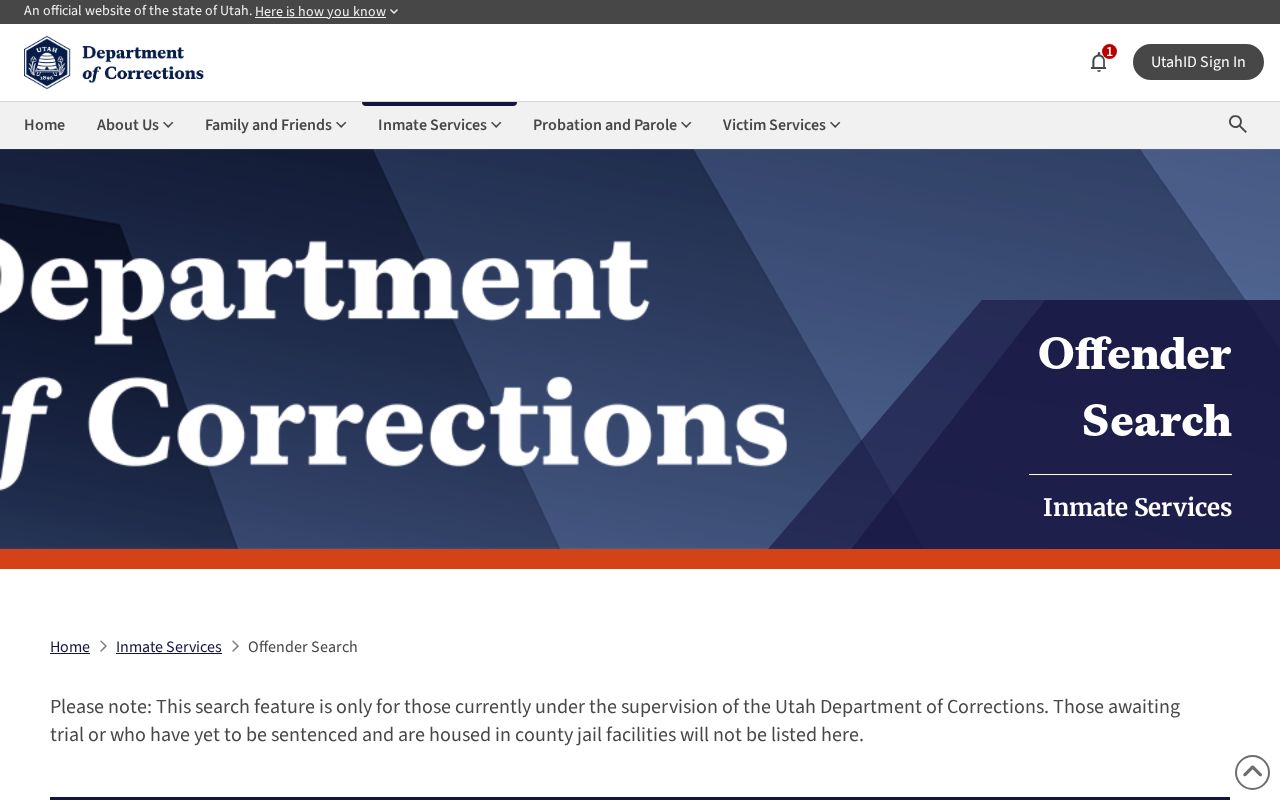
That limitation is why a UDC GRAMA record, Board order, or county movement record remains part of a complete date check.
Note: A court order may authorize release, but the custodian's movement log supplies the actual date and time of exit.
Beaver Release Date Terms
Utah's labels must not be compressed into one “projected date.” A guideline date is a presumptive recommendation about time to serve. A tentative hearing date estimates when the Board may hold a hearing. Neither promises release. A Board hearing or rehearing date is also procedural, even when it is important to the sentence timeline.
| Utah term | What it means | What it does not prove |
|---|---|---|
| Guideline date | A presumptive time-to-serve recommendation | A mandatory exit date |
| Tentative hearing date | An estimated month or year for a hearing | A parole date |
| Board hearing date | A scheduled procedural event | That release was ordered |
| Parole date | A Board target for release to supervision | That all prerequisites were met |
| Parole/expiration date | UDC's verified public-information label | One universal event in every record |
| Termination or expiration | The end of the inmate or parole sentence | The original day prison custody ended |
UDC lists a Board hearing date, parole/expiration date, sentence information, court identifiers, legal status, and listed placement among public fields. Not every field must appear on every web result. The UDC public-information page documents the official terminology and the records-request fallback.

The field label must be interpreted with legal status and the Board order rather than copied as an unconditional release promise.
Why Beaver Release Dates Differ
Utah Code § 77-18-111 makes state-prison sentences indeterminate minimum-to-maximum terms. The sentence continues to its maximum unless the Board ends or commutes it sooner. Concurrent and consecutive sentences are combined into a total range, and the Board uses guidelines plus the person's record to set hearings and later decisions. That system does not support a generic Beaver release-date calculator.
Utah Code § 77-27-9 generally bars release before the minimum term unless the Board makes the findings required after an open hearing. The section also contains offense-specific restrictions. No universal Utah rule requiring every prisoner to serve eighty-five percent was verified in the governing sources. Applying that percentage would misstate the state's sentence structure.
A Board parole date can still be rescinded before release. Conduct, a new conviction, unmet prerequisites, or an unapproved residence may cause delay or rescission. The Board's hearing and review types explain that rescission may take away a date before it is carried out.
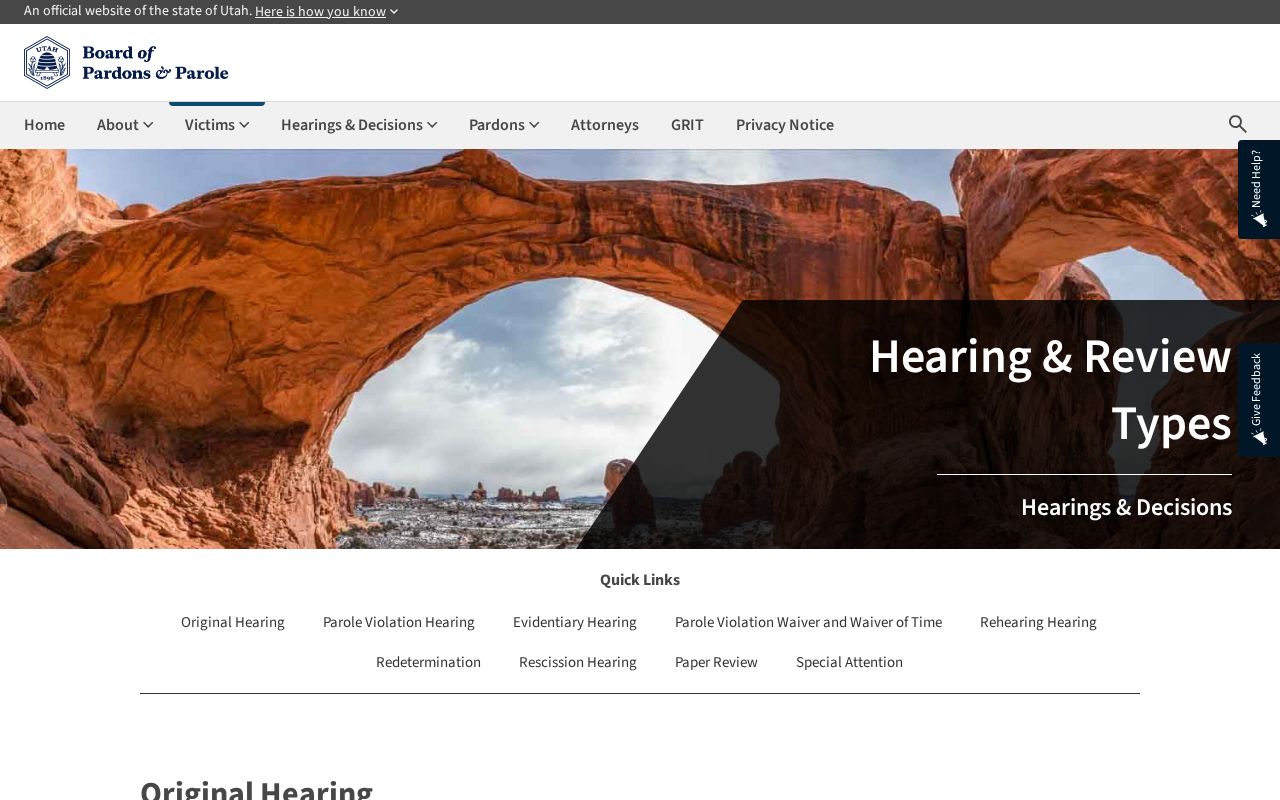
This is why the Board decision should be followed by a check of UDC legal status, VINE, and the custody movement.
Beaver Release Dates and Earned Time
Utah's earned-time law is Utah Code § 77-27-5.4. It provides at least four months of credit for completion of each of as many as two case-action-plan programs approved by UDC and the Board. The Board may grant more credit in its discretion. These credits affect an established Board date. They do not create a universal arithmetic formula for all inmates.
Eligibility has limits. Credit may be unavailable when too little time remains before a date already ordered, when there is no current release date, when required conditions remain unmet, or when the sentence involves an excluded life or expiration order. The Board may also forfeit credit if rescission proceedings become necessary. The exact application belongs in the Board and UDC record.
The official Utah earned-time statute supplies the controlling rule.
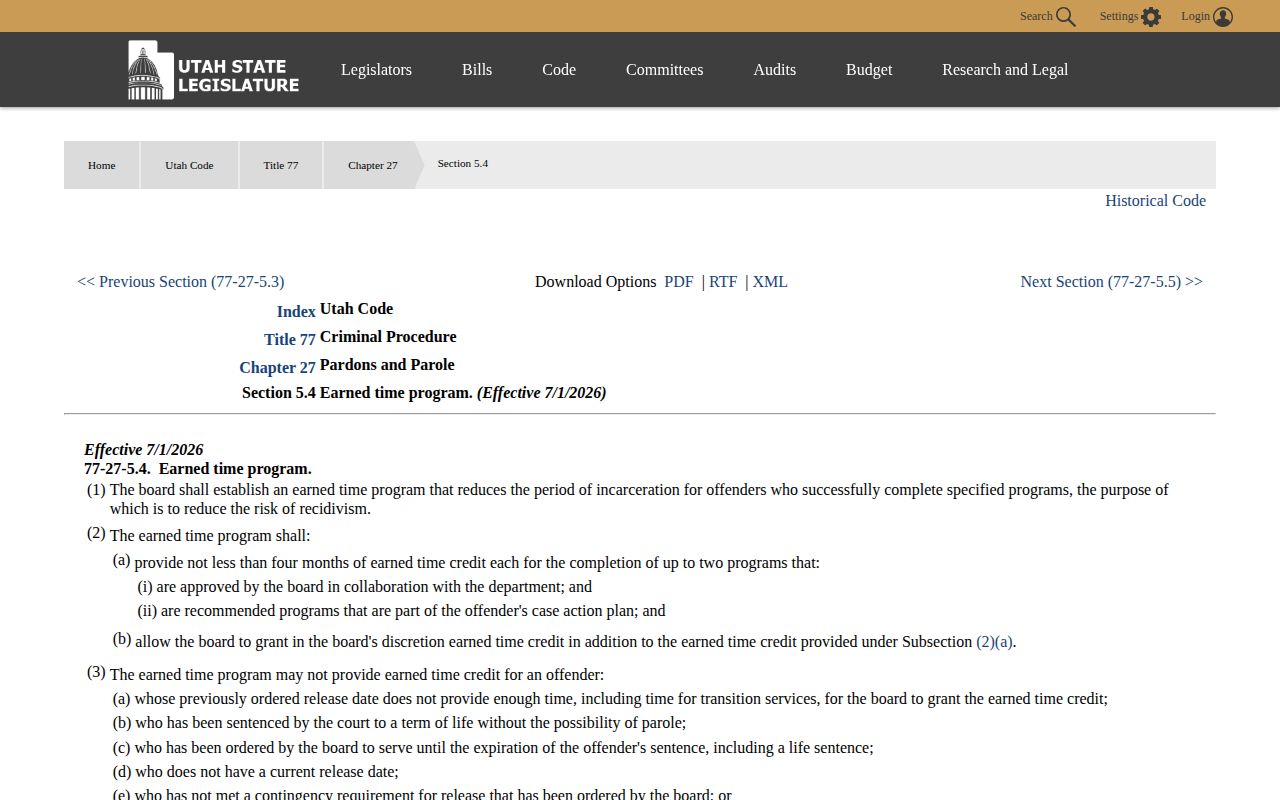
The statute should be applied to a verified state-prison record, never imported into an ordinary Beaver County jail sentence.
Note: Earned time can adjust a qualifying Board date, but it is not a stand-alone prediction of the day someone leaves custody.
Changes to Beaver Release Dates
Any future date must be checked close to the event. Different authorities can affect it, and a single public field may not show every contingency. The source of the change determines where to verify it.
| Factor | Possible effect | Verification source |
|---|---|---|
| Earned time | May advance an established Board date for a qualifying program | Board decision and UDC record |
| Rescission | May remove a date before release | Board review or rescission decision |
| Residence approval | May delay parole when the plan is not approved | Board order and AP&P |
| New court order | May change legal authority for county or state custody | Utah court docket and custodian |
| Detainer or hold | May send the person to another custodian | Movement record and receiving agency |
| Sentence credit | May affect a county-sentence calculation | Sentencing order and Beaver Corrections |
A detainer deserves special care. Beaver custody can end while another agency's custody begins. Such a movement is a transfer, not community release. Ask the jail record to name the receiving agency and continue with that system.
County and State Release Dates
Beaver County publishes no county good-time formula, fixed release weekday, or online projected-date calculator. For a county sentence, consult the sentencing order for credit and call Beaver Corrections. If an informal answer is unavailable, request the existing calculation policy and the person's actual custody-movement entry through Beaver's GRAMA process.
UDC prisoners follow a distinct process. The UDC release-day instructions say paroles and releases are processed on Tuesdays, mostly at Utah State Correctional Facility. People housed at the two state prisons have an earlier listed arrival than those housed in county jails. Almost all state prisoners housed in county facilities are still processed at USCF, with rare exceptions communicated to the family.
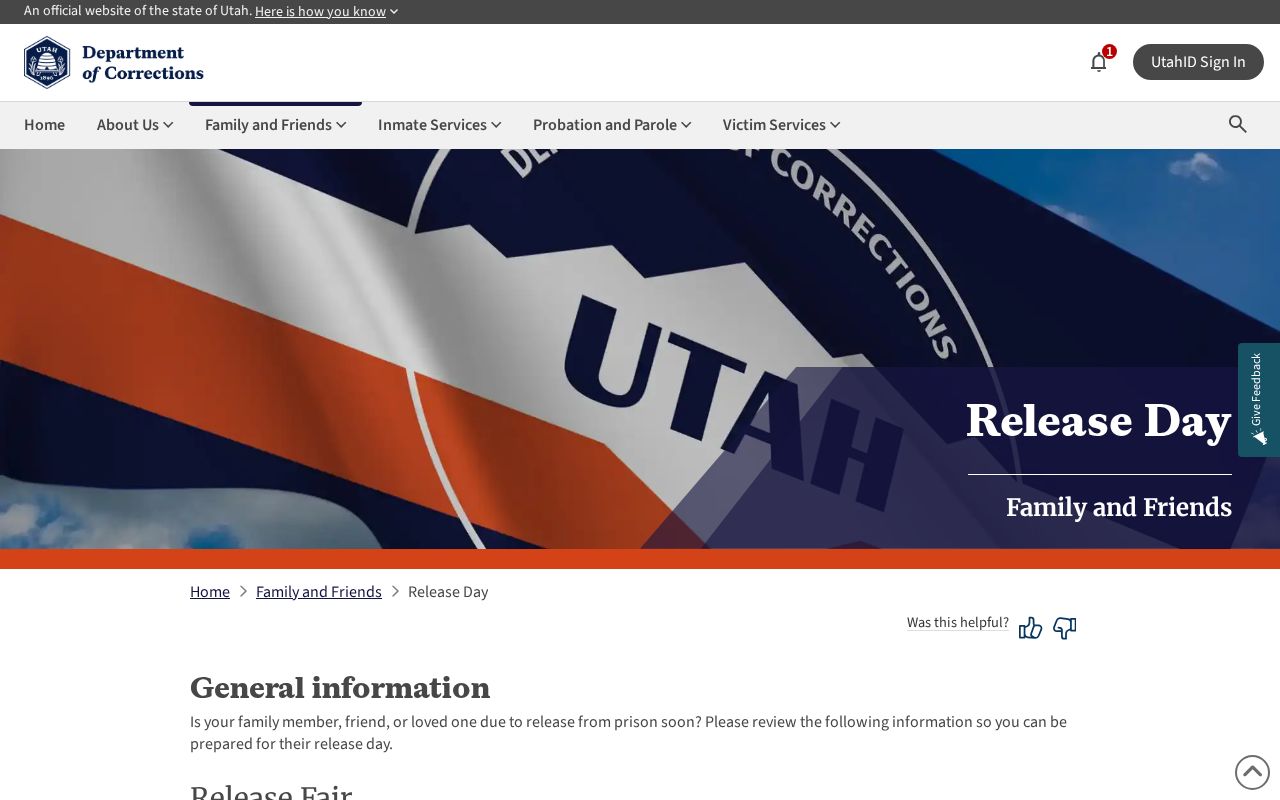
That state process does not apply to an ordinary Beaver pretrial detainee or county-sentence release.
After the expected event, confirm the actual outcome. UDC legal status may change to “Parolee,” VINE may report the event, and the movement record can show the date and destination. The Beaver VINE inmate check adds notification but does not replace the agency record.
Confirm Beaver Release Date Records
A Beaver County release date is strongest when two records answer different parts of the question. The court docket or Board order explains the legal authority. The jail or UDC movement record confirms when the custodian carried it out. VINE supplies a useful public signal, but it is not a permanent court archive and does not rule out a transfer or detainer.
For a Beaver jail case, call Corrections and ask whether the final movement was community release, transfer, or another hold. Ask whether the date, time, and type can be disclosed. If not, file the Beaver GRAMA form for the existing booking and custody-event record. Include full name, date of birth if known, booking or case number, a narrow date range, and the receiving agency when the event was a transfer.
For a fully discharged former state prisoner who no longer appears in the UDC search, use the Department GRAMA portal. Request the legal-status history, actual release or custody movement, parole or expiration date, termination date, Board order, and sentencing identifiers. UDC may redact protected or security material, but its public-information policy identifies the core status and date fields.
Negative results require another route. Absence from Beaver's booking display may only mean the rolling window passed. Absence from UDC may reflect discharge or lack of UDC jurisdiction. A missing VINE match can result from search, coverage, or retention limits. A sealed or expunged court case can disappear from public view. None of those gaps independently proves the date of release.
Identity must remain tied to the same custody system throughout the check. A Beaver booking number, UDC offender number, Board result, and court case can refer to separate stages, but only after the name and other identifiers match. When two records conflict, ask the agency that created each record to correct or explain its own field instead of choosing the more convenient date.
Note: Match birth date and agency identifiers before joining a Board, court, jail, or UDC date to one person.